
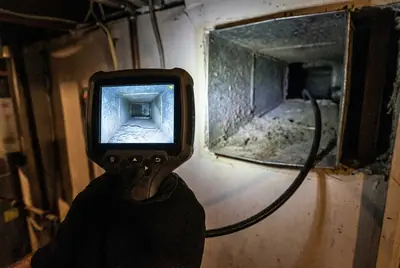
Duct camera inspections
A recorded pass through supply and return trunks, with findings you can watch rather than take on faith.
Offices, storefronts, clinics and classrooms in Leal and the rest of Barnes County get their ductwork inspected on camera, cleaned overnight and documented with photos.
Free, technical, and it ends in a written price that does not drift.
Is the air inside your commercial space feeling a little… off? Do you find yourself or your team sneezing more than usual, or perhaps noticing a persistent musty odor? This could be a sign that your building's ventilation system needs some serious attention.
You might not think about it often, but the network of pathways that delivers air throughout your business plays a crucial role in its overall health and atmosphere. These hidden channels, often concealed within walls and ceilings, can become breeding grounds for all sorts of unpleasantries that you and your employees unknowingly inhale. It's a bit like never cleaning your gutters, eventually, things start to back up and cause problems.
Think about all the microscopic particles that float around in any environment. Dust bunnies are just the tip of the iceberg. Over time, these systems can accumulate a thick layer of grime, including pet dander if you have furry clients or staff, tiny bits of insulation that might degrade, and even fragments of fabric or paper from everyday office life. Now, add to that the potential for mold spores and bacteria to take root, especially in damp or poorly ventilated areas. This creates a veritable smorgasbord for allergens and irritants, silently impacting the air you and your customers breathe.
This buildup isn't just unsightly if you were ever to see it; it actively degrades the quality of the air circulating through your property. Consequently, this can lead to a host of issues, from increased allergy symptoms and respiratory discomfort to a general feeling of staleness and a less-than-ideal working environment. It's a problem that often goes unnoticed until it becomes quite significant, affecting productivity and well-being.
Getting these vital air pathways professionally serviced can dramatically transform your business's interior atmosphere. It's not just about making things look cleaner in a place no one sees. The real magic happens when you start to experience the tangible improvements to the air itself. This process essentially gives your building a fresh set of lungs, allowing it to breathe freely once more.
Picture this: a workspace where the air feels crisp and clean, free from lingering odors and the triggers that can set off sneezes and itchy eyes. This is precisely what you can achieve by having these critical air conduits thoroughly cleaned. By removing the accumulated debris, you're actively preventing allergens and irritants from recirculating through your premises. This directly contributes to a healthier setting for everyone who walks through your doors, fostering a more pleasant and productive atmosphere.
Furthermore, a properly functioning and clean ventilation setup can actually help your system run more efficiently. When air can flow freely without obstruction, your equipment doesn't have to work as hard. This can translate into energy savings, a nice bonus that benefits your bottom line. It's a win-win situation, really, better air quality and potentially lower operating costs.
Pinpointing the exact moment your business needs this kind of service can sometimes be tricky. However, there are several tell-tale signs that suggest it's time to investigate. Paying attention to these indicators can help you address potential issues before they become major problems. It's like performing regular maintenance on your car; you do it before something breaks down catastrophically.
Have you noticed a distinct musty or stale smell that seems to hang around, no matter how much you air the place out? Or perhaps your staff members, or even you, have been experiencing an uptick in respiratory issues like coughing, sneezing, or persistent headaches when they're at work? These are strong indicators that the air you're all breathing might be compromised. Another subtle sign could be an increase in dust settling on surfaces very quickly after cleaning.
Additionally, if your business has recently undergone renovations, especially those involving drywall, insulation, or carpeting, significant amounts of fine particulate matter could have been introduced into the system. Even seasonal changes, like increased pollen counts or humidity, can exacerbate issues within a dirty system. Considering the unique climate patterns in areas like the expansive plains of North Dakota, where dust can be a frequent visitor, proactive cleaning becomes even more vital for maintaining pristine indoor air. This is especially true for a city like Leal, nestled in Barnes County, where a smaller population of around 15 and a median household income of $32,500 means businesses often operate on tighter budgets, making preventative care a smart economic choice.
When you decide to get this crucial aspect of your commercial building's infrastructure addressed, you'll want to work with professionals who understand the intricacies involved. They bring specialized equipment and knowledge to ensure the job is done thoroughly and effectively. This isn't a DIY task; it requires specific tools and expertise to reach and clean every nook and cranny safely.
Typically, a professional service will begin with a thorough inspection of your entire ventilation network. This allows them to identify problem areas and determine the best course of action. Using powerful, specialized vacuum systems and high-pressure air tools, they meticulously dislodge and remove accumulated dust, debris, and other contaminants from the interior surfaces of the ducts. They often employ advanced techniques to reach even the most inaccessible parts of the system, ensuring a comprehensive clean.
Furthermore, reputable technicians will take measures to prevent cross-contamination during the cleaning process. They use containment methods to ensure that dust and debris are captured effectively and don't spread throughout your business while they work. Post-cleaning, they might even apply sanitizing or antimicrobial treatments, if appropriate for your specific system and concerns, leaving the air pathways not just clean, but also healthier. This comprehensive approach ensures that you're getting the most significant possible improvement in your indoor air quality.
Opting for a local provider for these services brings a unique set of advantages, especially when you're running a business in a community like Leal. They understand the specific environmental factors and building codes relevant to our area. Plus, supporting local businesses keeps our community strong and vibrant.
When you engage a local firm, you're often working with technicians who have a deep understanding of the region's climate and common indoor air quality challenges. They're familiar with the types of materials used in local construction and the potential issues that can arise in buildings situated here in Barnes County. This local insight allows them to tailor their approach for optimal results, addressing specific concerns pertinent to properties in ZIP codes like.
Moreover, the accessibility of a local team means quicker response times should an urgent need arise. They are part of our community, making them invested in providing reliable and efficient service. This relationship fosters trust and ensures you're receiving personalized attention for your business's unique needs, rather than a one-size-fits-all solution.
It's natural to have questions when considering a service like this for your commercial property. People often wonder about the disruption involved, the cost, and whether the benefits truly outweigh the investment. Let's clear up some of these common queries.
One frequent concern is the potential disruption to business operations. However, professional cleaning teams are adept at working efficiently and often can schedule service during off-peak hours or weekends to minimize impact. Their goal is to get the job done swiftly and with as little inconvenience to you as possible.
Another question often revolves around the cost. While there's an upfront investment, it's essential to view it as a long-term benefit. Improved air quality can lead to fewer sick days for employees, potentially reducing healthcare costs and boosting productivity. Furthermore, an efficient ventilation system can lead to energy savings. Considering the potential health advantages and operational efficiencies, the investment often pays for itself over time. It's about creating a healthier, more productive environment for your team and clients, which is invaluable.
The impact of professional ventilation system servicing extends far beyond simply removing dust. It's about cultivating an environment where your business can truly thrive. When people feel good, they work better and clients have a more positive experience.
Imagine your employees feeling more alert and energized throughout the day, with fewer complaints about allergies or headaches. This improved indoor atmosphere directly contributes to enhanced focus and greater productivity. A breath of fresh, clean air can make a noticeable difference in overall morale and job satisfaction.
Furthermore, for businesses that interact with the public, the impression you make matters immensely. A clean, fresh-smelling environment signals professionalism and care for your customers. It contributes to a more welcoming atmosphere, encouraging longer stays and repeat business. It's a subtle yet powerful way to enhance your brand image and customer satisfaction.
If you're sensing that the air in your commercial space could be better, or if you're simply looking to ensure the healthiest possible environment for your team and customers, now is the perfect time to explore professional ventilation system cleaning. It's a proactive step that can yield significant returns in terms of health, productivity, and overall business success.
Don't let stale air or hidden contaminants hold your business back. Taking this step is an investment in the well-being of everyone who enters your doors and the continued success of your operation. It's about creating a space where everyone can breathe deeply and perform at their best.
Take that first step towards a revitalized workspace. We're here to help you understand your options and provide a clear picture of how this essential service can benefit your specific business needs. Let us help you achieve the pristine indoor air quality your establishment deserves.
A camera goes into the trunk lines first. What comes back decides everything: which runs carry real buildup, which only need their registers washed, and which are clean enough to leave alone. The findings are shown to you, not summarized at you, and if the honest answer is that your ducts do not need cleaning yet, that is what the visit concludes.
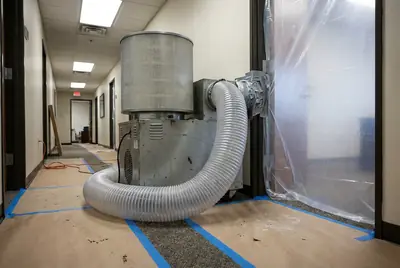
Before anything is loosened, the section under work is isolated and a vacuum collector is coupled to the duct so air moves toward the machine and nowhere else. Floors get covered, ceiling tiles get numbered, and the occupied side of the building keeps working with no idea we are there.
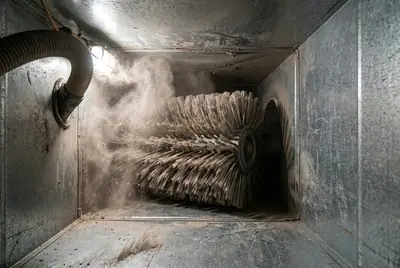
Rotary brushes and compressed air tools work down each run toward the collector, taking the buildup off the metal rather than pushing it deeper. The camera goes back in afterwards. If a stretch still shows residue, it gets done again before the access points are sealed and the registers go back on.
Some buildings need one misbehaving system dealt with. Others need the whole air side reset to zero. The table is the honest version of that choice.
Large sites are phased so no floor loses more than one night, and the same crew lead stays on the job from the first shift to the last photo.
A recorded pass through supply and return trunks, with findings you can watch rather than take on faith.
Rotary brushes and air whips sized to each duct, working the full length of every run toward the collector.
Vacuum units with fine filtration pull everything loosened straight out of the ductwork and off site.
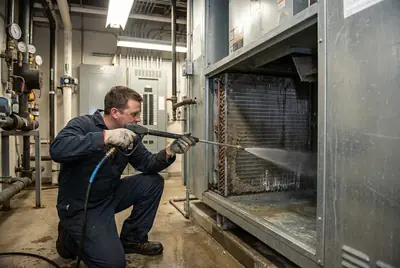
Blower wheels, plenum interiors and coils degreased and rinsed where the air actually picks up its speed.
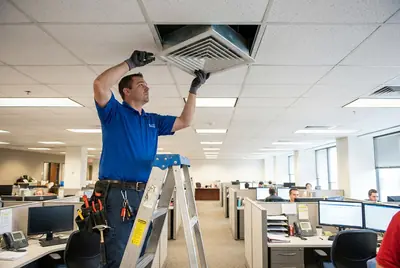
Every visible fitting comes off, gets washed and goes back straight, because occupants judge the job by what they can see.
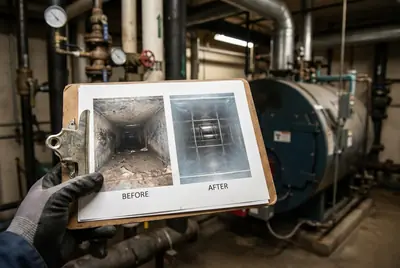
Before and after shots of each run and unit, labeled by floor, sent to whoever answers for the building.
It starts small. Gray fuzz on the desks two days after the janitorial pass. A smell like hot cardboard the first cold morning the heat comes on. A meeting room that feels used up twenty minutes into the hour. The person who sits under the same diffuser and swears the sniffles start on Monday and stop on Friday evening.
None of that proves the ductwork is dirty, and that is precisely why the camera goes in before any quote goes out. But when a building collects complaints of that shape, the supply and return runs are the one place nobody has looked, because nobody can without opening them. Years of drywall sanding, carpet fibers, kitchen aerosols and plain sediment ride the airstream and settle where the air slows down, and every startup of the fans stirs a little of it back over the people below.
After a proper cleaning, the change is undramatic and steady: filters load slower, the startup smell is gone, the dust cycle on the furniture stretches from days to weeks, and the complaints log goes quiet on the subject. Clean air does not announce itself. It just stops reminding people of the alternative.
Our estimator walks the building in Leal with whoever knows it best, counts units and registers, lifts a few access panels and listens to what the occupants have been saying.
One document with the scope floor by floor, the night or weekend windows the work will use, and a figure that does not move once you sign it.
Drop cloths down, furniture sheeted where we pass, the first section isolated and coupled to the collector before a single fitting is opened.
Runs brushed to the collector, units and coils cleaned in place, each zone closed and its registers refitted before the crew moves on.
Access points sealed and labeled, the before and after file sent over, and a short note on anything worth budgeting for the years ahead.
Ceiling height, access hatches and how many years the system went untouched decide where inside these spans a building lands. The walkthrough turns them into one firm figure, and the walkthrough is free.
Containment is not a premium option. The section being cleaned is sealed and kept under suction toward the collector for as long as a tool is inside it, the collectors filter what they capture instead of relocating it, and the debris leaves in closed containers the same night. If a ceiling tile moved, it goes back. If a desk was sheeted, the sheet comes off and the desk looks exactly as its owner left it.
Proof beats promises. The camera footage from the inspection, the before and after photos of every run and the list of access points we cut and sealed all go to you, unedited. And when a run turns out not to need cleaning, the quote says so in writing, because a company that cleans ducts for a living should be the one telling you when yours are fine.
Almost never. The work is phased zone by zone during the hours you hand us, usually nights and weekends around Leal, and each zone is finished, resealed and back in service before occupants return. Most tenants learn the ducts were cleaned from the memo, not from anything they saw.
By never letting it into them. The section under work is isolated and held under suction toward the collector, so loosened debris travels into the machine and not into the room. Floors and furniture along the route are covered anyway, because equipment gets carried through and belt and braces is the right dress code indoors.
With a camera, before any price is written. Buildup on the duct wall is either there or it is not, and you see the footage yourself. When an inspection finds runs that are still serviceable, the quote says so and shrinks accordingly.
Yes, and we would rather not skip them. The unit is where the air picks up speed, moisture and heat, so a spotless duct behind a dirty blower wheel is a job half done. Interiors, wheels, drain pans and coils are cleaned in place as part of a full building scope.
The dining room, the restrooms and the comfort systems are all standard scope. The grease exhaust over the cooking line is a different trade with different tooling, so it is priced separately at the walkthrough once we have seen the hood and the riser, and we tell you plainly if it needs a specialist instead.
A photo file with before and after shots of every run and unit, labeled by floor, plus the inspection footage and a note on the access points we added and sealed. It is the file you show an owner, an insurer or the tenant who asked, without needing us in the room.
Zoom for the lay of the land; the link lists further down name every community we book walkthroughs in from here.
Somewhere above these ceilings there is ductwork nobody has seen in years.
Book the walkthrough