
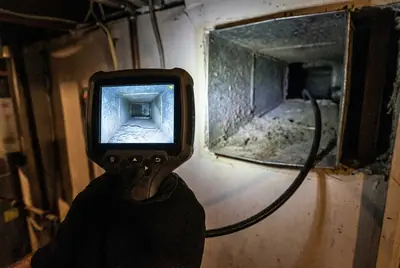
Duct camera inspections
A recorded pass through supply and return trunks, with findings you can watch rather than take on faith.
Everywhere in Pierce County, duct runs and air handlers come back clean, resealed and photographed, on hours the buildings choose.
Free, technical, and it ends in a written price that does not drift.
Your business needs clean indoor air so your team stays healthy and focused every single day. Yet most people totally forget about the hidden network of metal pathways moving that air around. Therefore this guide helps you find local pros for a free quote to clear out dust in Pierce County.
And indoor air pollution can sneak up on your employees without any obvious warning signs. But proper indoor climate upkeep fixes this issue before anyone starts coughing in the office. Which means you can protect your staff health while keeping productivity high all year long.
Now indoor air quality dictates how well your business runs when everyone is trapped inside during the cold Wisconsin winters. Because of this reality you should check your overhead vents for thick layers of fuzzy gray buildup. And that simple visual check saves you from breathing in nasty mold spores floating through your building.
Your building uses a complex maze of sheet metal runs to push conditioned air into every single room. But over the years those hidden tunnels collect pounds of dust, pet dander, and microscopic debris. And that accumulated filth forces your HVAC unit to work twice as hard just to keep the office warm.
Meanwhile moisture can get trapped inside those dark metal shafts and create a cozy home for mold colonies. However a thorough mechanical brushing removes every trace of grime clinging to the interior walls. That deep scrubbing lets your system breathe freely and stops foul musty odors from taking over your workspace.
Your monthly utility bills might be creeping higher because choked airflow makes your furnace burn extra fuel. Yet many business owners blame high energy costs on bad weather instead of looking at their clogged ductwork. And fixing this hidden drag on your system lowers your power consumption in a very noticeable way.
Furthermore dirty air can trigger nasty allergic reactions among your best workers during the busy afternoon hours. But bringing in a qualified HVAC restoration crew clears out those allergens completely before complaints start rolling in. Which means you create a much safer environment where everybody feels comfortable working hard.
Your commercial property deserves top notch care from folks who truly understand local building codes and regional climate challenges. But hiring just any random handyman can lead to sloppy work and damaged sheet metal joints. Therefore you must always look for a licensed and insured contractor who brings genuine industry experience to your job site.
Additionally you should request a detailed written estimate before letting anyone touch your overhead climate control infrastructure. But do not forget to ask about their specific removal methods and the type of equipment they bring inside. That smart precaution ensures your workplace stays neat while workers vacuum out years of accumulated industrial grit.
Your local service provider should gladly show proof of liability insurance and proper state certifications upon your request. But if they hesitate or dodge your questions you better walk away and find someone more trustworthy. And taking that extra minute to vet your contractor protects your business property from costly accidents.
Meanwhile you want to verify that the technicians use heavy duty negative air machines equipped with true HEPA filters. Because weak consumer vacuums just blow the fine dust back into your rooms instead of capturing it. Which means your air actually gets dirtier if the crew brings inferior tools to your commercial facility.
Your office registers might show dark fuzzy halos clinging to the painted drywall surrounding the metal vents. But that visual clue tells you the entire internal network is completely overloaded with trapped particulate matter. And seeing that mess means you need to schedule a thorough ventilation sanitation service right away.
Furthermore you might notice a strange stale smell every single time your heating and cooling equipment kicks on. However professional technicians can track down the source of that odor and eliminate it at the root level. That deep cleaning restores crisp airflow and makes your whole office smell fresh again.
Your local technicians will start by mapping out your entire forced air network to locate every access point. But they will also protect your office furniture and computer equipment with clean drop cloths before starting any messy tasks. And that attention to detail keeps your workspace tidy while they work their magic.
Next they hook up a massive vacuum system outside your building to create powerful suction throughout the metal trunks. Meanwhile they send specialized rotary brushes and air whips down the line to dislodge stubborn debris. Which means every last speck of dust gets sucked right out of your building for good.
Your contractor should inspect the interior surfaces with a tiny camera to prove the metal trunks are totally spotless. But they will also sanitize the system with safe antimicrobial treatments if they spot any lingering mold or mildew. And that final protective step stops new spores from growing inside your dark air passages.
Finally your HVAC unit will run much smoother and push conditioned air into your rooms with impressive force. However you still need to change your standard wall filters every month to keep the system running efficiently. That ongoing maintenance protects your fresh ducts and saves you money on future repair bills.
Your business cannot afford to wait until your heating system completely breaks down from clogged internal pathways. But you can easily connect with trusted local professionals who offer a free quote for your specific commercial building. And taking that first step today ensures a healthier indoor climate for everyone who walks through your doors.
Simply fill out the quick request form on this page to get matched with qualified experts right here in the area. But remember to ask all the right questions about their licensing and guarantees before booking the job. Which means you stay fully in control while securing the best possible care for your commercial property.
A camera goes into the trunk lines first. What comes back decides everything: which runs carry real buildup, which only need their registers washed, and which are clean enough to leave alone. The findings are shown to you, not summarized at you, and if the honest answer is that your ducts do not need cleaning yet, that is what the visit concludes.
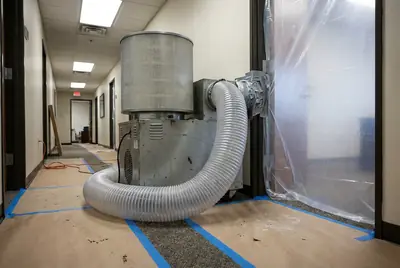
Before anything is loosened, the section under work is isolated and a vacuum collector is coupled to the duct so air moves toward the machine and nowhere else. Floors get covered, ceiling tiles get numbered, and the occupied side of the building keeps working with no idea we are there.
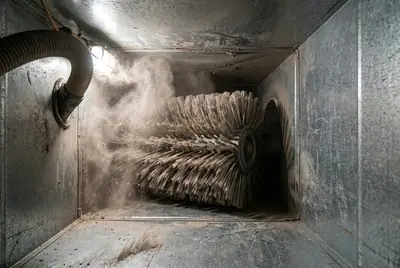
Rotary brushes and compressed air tools work down each run toward the collector, taking the buildup off the metal rather than pushing it deeper. The camera goes back in afterwards. If a stretch still shows residue, it gets done again before the access points are sealed and the registers go back on.
Some buildings need one misbehaving system dealt with. Others need the whole air side reset to zero. The table is the honest version of that choice.
Large sites are phased so no floor loses more than one night, and the same crew lead stays on the job from the first shift to the last photo.
A recorded pass through supply and return trunks, with findings you can watch rather than take on faith.
Rotary brushes and air whips sized to each duct, working the full length of every run toward the collector.
Vacuum units with fine filtration pull everything loosened straight out of the ductwork and off site.
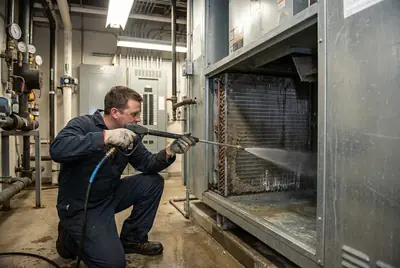
Blower wheels, plenum interiors and coils degreased and rinsed where the air actually picks up its speed.
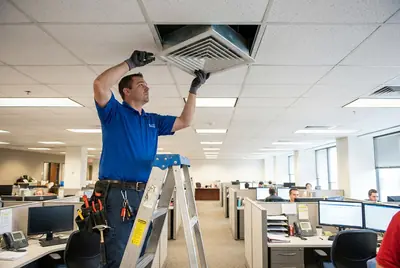
Every visible fitting comes off, gets washed and goes back straight, because occupants judge the job by what they can see.
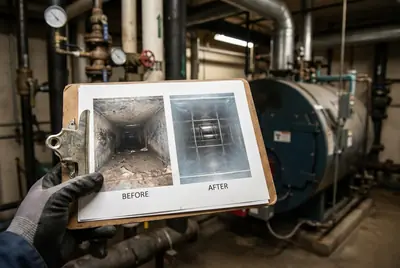
Before and after shots of each run and unit, labeled by floor, sent to whoever answers for the building.
It starts small. Gray fuzz on the desks two days after the janitorial pass. A smell like hot cardboard the first cold morning the heat comes on. A meeting room that feels used up twenty minutes into the hour. The person who sits under the same diffuser and swears the sniffles start on Monday and stop on Friday evening.
None of that proves the ductwork is dirty, and that is precisely why the camera goes in before any quote goes out. But when a building collects complaints of that shape, the supply and return runs are the one place nobody has looked, because nobody can without opening them. Years of drywall sanding, carpet fibers, kitchen aerosols and plain sediment ride the airstream and settle where the air slows down, and every startup of the fans stirs a little of it back over the people below.
After a proper cleaning, the change is undramatic and steady: filters load slower, the startup smell is gone, the dust cycle on the furniture stretches from days to weeks, and the complaints log goes quiet on the subject. Clean air does not announce itself. It just stops reminding people of the alternative.
Our estimator walks the building with whoever knows it best, counts units and registers, lifts a few access panels and listens to what the occupants have been saying.
One document with the scope floor by floor, the night or weekend windows the work will use, and a figure that does not move once you sign it.
Drop cloths down, furniture sheeted where we pass, the first section isolated and coupled to the collector before a single fitting is opened.
Runs brushed to the collector, units and coils cleaned in place, each zone closed and its registers refitted before the crew moves on.
Access points sealed and labeled, the before and after file sent over, and a short note on anything worth budgeting for the years ahead.
Ceiling height, access hatches and how many years the system went untouched decide where inside these spans a building lands. The walkthrough turns them into one firm figure, and the walkthrough is free.
Containment is not a premium option. The section being cleaned is sealed and kept under suction toward the collector for as long as a tool is inside it, the collectors filter what they capture instead of relocating it, and the debris leaves in closed containers the same night. If a ceiling tile moved, it goes back. If a desk was sheeted, the sheet comes off and the desk looks exactly as its owner left it.
Proof beats promises. The camera footage from the inspection, the before and after photos of every run and the list of access points we cut and sealed all go to you, unedited. And when a run turns out not to need cleaning, the quote says so in writing, because a company that cleans ducts for a living should be the one telling you when yours are fine.
Almost never. The work is phased zone by zone during the hours you hand us, usually nights and weekends, and each zone is finished, resealed and back in service before occupants return. Most tenants learn the ducts were cleaned from the memo, not from anything they saw.
By never letting it into them. The section under work is isolated and held under suction toward the collector, so loosened debris travels into the machine and not into the room. Floors and furniture along the route are covered anyway, because equipment gets carried through and belt and braces is the right dress code indoors.
With a camera, before any price is written. Buildup on the duct wall is either there or it is not, and you see the footage yourself. When an inspection finds runs that are still serviceable, the quote says so and shrinks accordingly.
Yes, and we would rather not skip them. The unit is where the air picks up speed, moisture and heat, so a spotless duct behind a dirty blower wheel is a job half done. Interiors, wheels, drain pans and coils are cleaned in place as part of a full building scope.
The dining room, the restrooms and the comfort systems are all standard scope. The grease exhaust over the cooking line is a different trade with different tooling, so it is priced separately at the walkthrough once we have seen the hood and the riser, and we tell you plainly if it needs a specialist instead.
A photo file with before and after shots of every run and unit, labeled by floor, plus the inspection footage and a note on the access points we added and sealed. It is the file you show an owner, an insurer or the tenant who asked, without needing us in the room.
Zoom for the lay of the land; the link lists further down name every community we book walkthroughs in from here.
Somewhere above these ceilings there is ductwork nobody has seen in years.
Book the walkthrough